ICAP CFO Conference 2026 Puts Spotlight on AI, Economic Reform and Pakistan’s Investment Future

ISLAMABAD
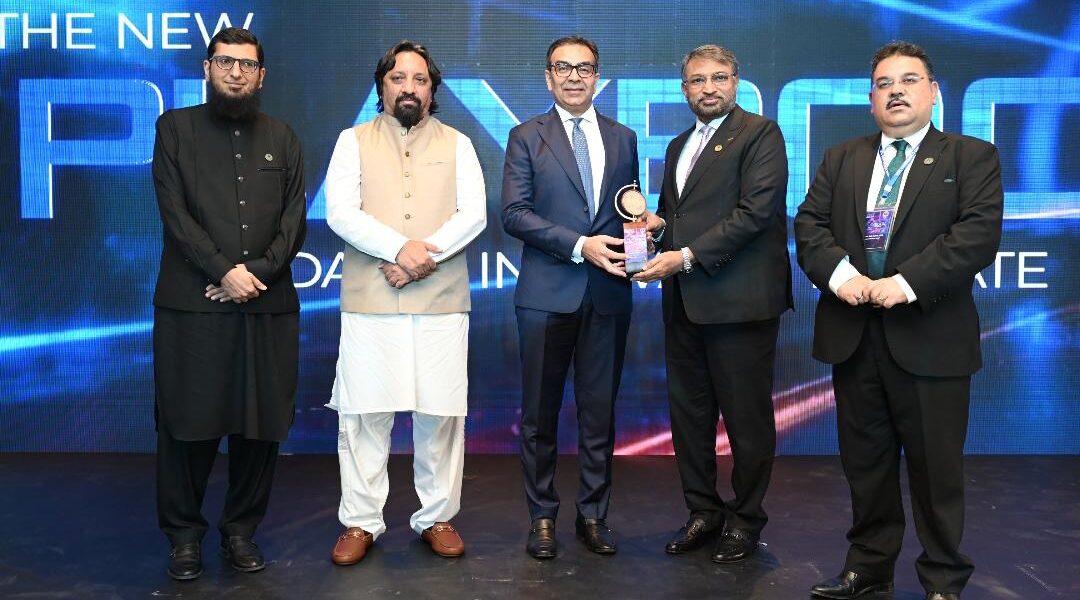
The Institute of Chartered Accountants of Pakistan (ICAP) hosted the Islamabad edition of the CFO Conference 2026, bringing together top finance executives, policymakers, regulators and business leaders to discuss Pakistan’s economic outlook, investment climate and the evolving role of finance leadership in a rapidly changing global environment.
Held under the theme “The New Playbook – Adapt, Innovate, Elevate,” the conference focused on economic resilience, artificial intelligence, privatization reforms and strategic leadership amid ongoing fiscal and geopolitical challenges.
In his opening remarks, ICAP President Muhammad Samiullah Siddiqui said Chief Financial Officers are increasingly emerging as strategic decision-makers responsible for steering organisations through economic uncertainty and technological disruption.
The conference featured a keynote address by Fauji Fertilizer Company Managing Director Jahangir Piracha, who highlighted the importance of transforming volatility into long-term value through strategic leadership and institutional adaptability.
A major policy-focused session was delivered by Special Investment Facilitation Council (SIFC) Federal Secretary Jamil Ahmed Qureshi, who outlined government efforts aimed at improving investment facilitation, strengthening policy coordination and enhancing investor confidence in Pakistan.
One of the conference’s central discussions examined Pakistan’s broader economic outlook, with participants debating taxation challenges, political instability, liquidity constraints and structural policy fragmentation alongside emerging investment opportunities.
The panel included economist Haroon Sharif, Hoechst Pharma CEO Sajjad Iftikhar, Additional Secretary SIFC Sajid Mehmood Qazi and former Minister of State Ashfaq Tola.
The event also placed strong emphasis on privatization and governance reforms, with Prime Minister’s Adviser on Privatization Muhammad Ali discussing the government’s strategy to reform state-owned enterprises (SOEs) to improve competitiveness and economic resilience.
Another session explored investor appetite for privatization opportunities using Pakistan International Airlines (PIA) as a case study, with experts discussing factors influencing serious capital inflows into Pakistan’s corporate sector.
Artificial intelligence and digital transformation emerged as key themes throughout the conference, particularly during a presentation by Bramerz CEO Badar Khushnood on how Pakistani CFOs are increasingly integrating AI tools into financial operations, risk management and growth strategies.
Industry leaders also discussed how finance professionals must adapt to technology-driven disruption and geopolitical uncertainty by developing new leadership capabilities and digital competencies.
The conference concluded with discussions on Pakistan’s growing potential as a hub for business process outsourcing (BPO) and shared services, with speakers highlighting the country’s expanding competitiveness in the global outsourcing market.
Participants described the conference as an important platform for strengthening dialogue between industry leaders, regulators and policymakers as Pakistan seeks sustainable economic growth and digital transformation.