
Pakistan’s first fully AI-generated feature film is heading to television screens, but its upcoming broadcast is already fueling criticism over the growing use of artificial intelligence in storytelling and creative industries.
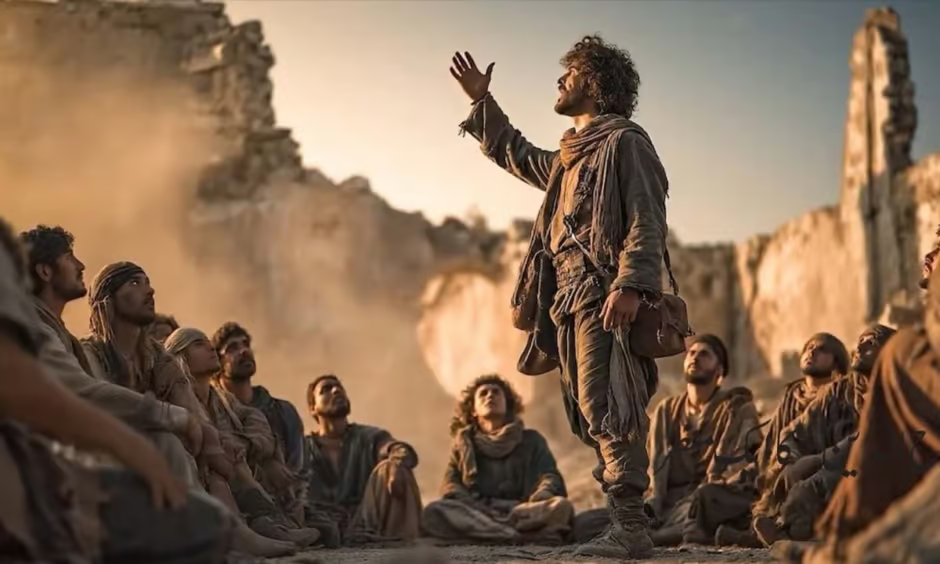
The Next Salahuddin, a film created entirely using generative AI tools, is set to premiere on HUM TV after a limited theatrical release earlier this year. The announcement has triggered widespread debate online, with critics questioning whether artificial intelligence should be used to tell emotionally sensitive and politically charged stories.
Produced by Jinn TV and directed by Farhan Siddiqui, the film follows a young Palestinian boy whose life is shattered by war in Gaza before he dreams of uniting Muslims worldwide under the legacy of Salahuddin Ayyubi.
Supporters of the project have described it as a technological milestone for Pakistan’s entertainment industry, arguing that AI-powered filmmaking could lower production costs and open new creative opportunities for independent creators.
However, criticism has intensified on social media, where users questioned the ethics of using AI-generated visuals and performances in narratives centered on war, trauma and human suffering. Others warned that increasing reliance on AI could threaten jobs for writers, animators, designers and filmmakers already working in Pakistan’s struggling entertainment sector.
The backlash mirrors broader global concerns surrounding AI in cinema. International film industries, including Bollywood and Hollywood, have also faced growing disputes over AI-generated scripts, visuals and digitally altered performances. Filmmakers and actors have increasingly argued that AI risks undermining artistic authenticity and human creativity.
Despite the criticism, the upcoming television release marks a significant moment for Pakistan’s digital media landscape, where experimentation with AI-generated content is accelerating across film, advertising and online entertainment.
The debate surrounding The Next Salahuddin now reflects a larger question facing creative industries worldwide: whether artificial intelligence should serve as a supporting tool for artists — or become a replacement for traditional filmmaking itself.