Iran Plans ‘Digital Toll Tax’ on Hormuz Internet Cables Amid Global Connectivity Fears

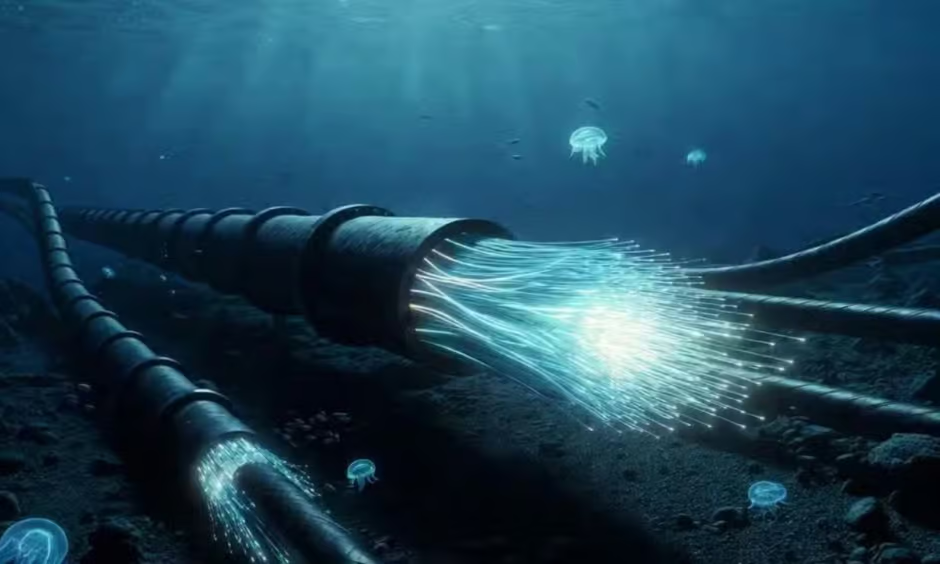
Iran is considering imposing transit and licensing fees on subsea internet cables passing through the strategic Strait of Hormuz, a move that could increase geopolitical tensions and raise concerns over global digital connectivity, according to regional media reports.
Iranian military spokesperson Ebrahim Zolfaghari said Tehran plans to “impose fees on internet cables” crossing waters claimed by Iran, while lawmakers and media outlets linked to the Islamic Revolutionary Guard Corps (IRGC) have proposed bringing global technology firms under Iranian regulatory oversight.
The proposed framework could require submarine cable operators and technology companies including Google, Microsoft, Meta and Amazon to pay transit fees, obtain licenses and rely on Iranian firms for cable maintenance and repair operations.
The Strait of Hormuz, one of the world’s most sensitive maritime chokepoints, carries a significant share of global internet and financial traffic through submarine fiber-optic cables connecting Europe, Asia and the Gulf region. Analysts warn that any disruption could affect banking systems, cloud services, AI infrastructure, video streaming, online gaming and cross-border financial transactions worldwide.
According to reports, Iranian state-linked media argued that the country should monetize its strategic location by charging international cable operators and asserting greater control over digital infrastructure in the region. Some estimates cited by Iranian lawmakers suggested the proposed fees could generate billions of dollars annually.
However, legal and industry experts questioned whether Tehran could realistically enforce such measures, particularly under existing U.S. sanctions that prohibit many international firms from making payments to Iran.
“The risk of adversarial subsea cable cuts has always been there, but an open threat from a nation-state like Iran adds urgency,” internet monitoring group NetBlocks told Radio Free Europe/Radio Liberty.
The development comes amid growing concerns over the vulnerability of global undersea cable infrastructure. Earlier this month, Bezeq announced plans for a new subsea cable project linking Europe and Asia partly to reduce dependence on the Strait of Hormuz corridor.
Industry analysts say any instability in the region could particularly impact Gulf economies, India’s outsourcing sector and global financial networks that rely heavily on uninterrupted subsea connectivity.