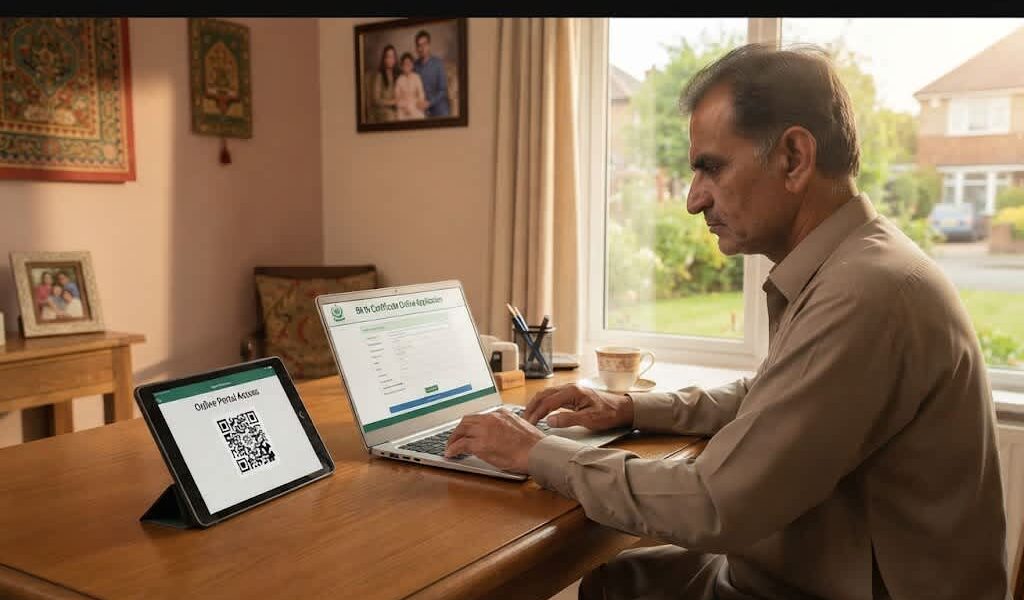
Birth Certificate at Your Doorstep? ‘Digital Pakistan’ Promise Tested as Citizens Are Still Forced to Visit Government Offices

Pakistan’s push towards a digitally connected state is facing questions over how effectively online government services work from end to end, after a citizen’s attempt to obtain his father’s death certificate turned into a prolonged cycle of online applications, failed uploads, unanswered calls and repeated visits to government offices.
The citizen said he initially applied for the death certificate through the PakID app, describing the online application process as smooth at the outset. The required documents were submitted through the platform as instructed, with the expectation that the process would be completed without the need for a physical visit.
However, about a week later, the application was rejected on the grounds that additional documents were required — documents the applicant said had not been mentioned during the initial application process.
The difficulties increased when the applicant found that the PakID app did not provide an option to re-upload the requested documents. He was reportedly advised to lodge a complaint before being able to submit the additional files.
Even after filing the complaint, the document-upload process continued to fail. The applicant said he attempted to upload multiple files but was unable to complete the process successfully, eventually resorting to sending the documents directly by email.
The application was subsequently rejected again over allegedly missing documents, despite the applicant maintaining that the requested files had already been provided.
Attempts to resolve the issue through the NADRA helpline added another layer of confusion. According to the account, the helpline staff said the application number could not be properly recognised for uploading documents through the app and subsequently advised that the matter fell under the jurisdiction of the CDA rather than NADRA.
The applicant then attempted to contact the CDA helpline, but said repeated calls went unanswered.
With the online route effectively stalled, the applicant was eventually told to visit a government office in person — raising a fundamental question about the purpose of an online system marketed as a digital alternative to conventional paperwork and office visits.
The experience then moved from a digital problem to a physical one at the G-9 Asaan Khidmat Center.
According to the citizen’s account, staff at the center said that only one officer was responsible for handling online cases and advised him to return the following day. When he returned, he was reportedly told that the officer was unavailable and that he should try again the next morning between 8am and 9am.
The applicant said he arrived at around 8:15am but was then informed that the concerned officer would not arrive until after 10am. Attempts to communicate with the officer through WhatsApp reportedly produced no response.
After taking half a day’s leave from work to finally meet the officer, the applicant said he was asked a question that, in his view, could have been resolved through a simple phone call rather than requiring another physical visit.
The application was eventually resubmitted without any changes to the documents, according to the account. But the matter did not end there. The applicant was asked to return once again over confusion concerning relatives’ records — an issue he believed could similarly have been clarified remotely.
The episode highlights a broader challenge facing Pakistan’s digital transformation efforts: digitising a form or application is not the same as digitising an entire government service.
For citizens, a genuinely digital service requires more than an online front end. Applications should be trackable, documents should be capable of being re-uploaded when necessary, departments should be able to communicate with one another, and applicants should have clear channels to resolve technical or administrative problems without being forced back into physical queues.
The case also illustrates the consequences of gaps between government departments. When an application moves between institutions such as NADRA and CDA, citizens should not have to determine which department is responsible, repeat their information or physically travel between offices simply because the digital systems do not communicate effectively.
As Pakistan continues to pursue the vision of a Digital Nation, the success of that transformation will ultimately be measured not only by the number of apps, portals and online services launched, but by whether ordinary citizens can complete routine government processes without repeatedly falling back on manual procedures.
A broken digital handoff, an unavailable upload option, an unanswered helpline or a missing inter-departmental connection can turn what should be a simple online transaction into hours of lost time and repeated office visits.
The experience therefore raises a wider question for Pakistan’s digital governance agenda: Should a service still be considered fully digital if the citizen must eventually take leave from work and visit a government office to make the system work?
For digital transformation to deliver its promised benefits, citizen-facing services need to become genuinely end-to-end digital — from application and document submission to verification, inter-departmental processing and final issuance.