Digital Pakistan Initiative: How Technology Is Quietly Changing Everyday Life

For many Pakistanis, technology has already become part of daily life — from paying electricity bills on a mobile phone to applying for documents online. Behind this growing shift is the Digital Pakistan Initiative, a national effort aimed at bringing government, business, and citizens into the digital age.
Unlike traditional reforms, Digital Pakistan is not limited to one sector. It affects education, jobs, banking, healthcare, and even how citizens interact with the state. Yet, many people still ask a simple question: what exactly is Digital Pakistan, and how does it help ordinary citizens?
What Is the Digital Pakistan Initiative?
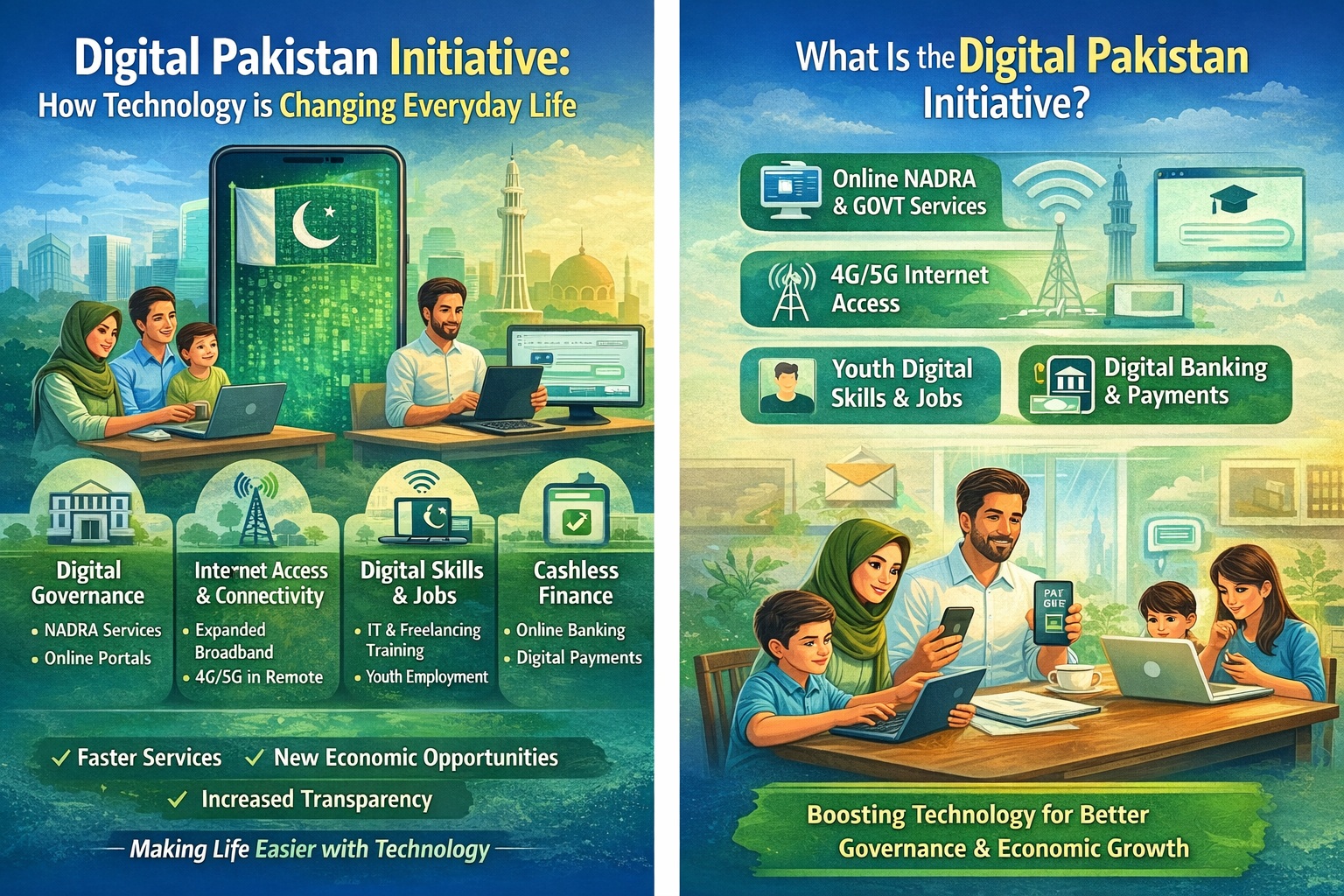
The Digital Pakistan Initiative is a government-led framework designed to use technology to improve public services, economic opportunities, and transparency. Its main idea is simple: use digital tools to make life easier, faster, and more accessible for citizens.
Instead of relying on paperwork, physical offices, and long queues, the initiative promotes online platforms, mobile services, and data-driven systems.
Digital Pakistan is not a single project. It is a long-term direction that brings multiple reforms under one digital vision.
Why Digital Pakistan Was Needed
Pakistan has a young population, rising smartphone usage, and increasing internet access. At the same time, citizens have long faced challenges such as slow services, lack of transparency, and limited job opportunities.
Digital Pakistan was introduced to address these gaps by:
- Reducing dependency on physical offices
- Expanding digital access to remote areas
- Creating new economic opportunities
- Improving service delivery through technology
In short, it aims to modernise how the country functions.
Key Pillars of the Digital Pakistan Initiative
1. Digital Government Services
One of the most visible impacts of Digital Pakistan is the shift of government services to online platforms.
Citizens can now:
- Apply for identity-related services digitally
- Access records online
- Track applications without repeated visits
This reduces corruption, saves time, and lowers costs for both citizens and institutions.
2. Digital Connectivity and Internet Access
Technology cannot work without connectivity. Digital Pakistan focuses on expanding broadband and mobile internet coverage, especially in underserved areas.
Improved connectivity allows:
- Students to access online education
- Freelancers to work for global clients
- Small businesses to reach wider markets
Internet access is increasingly seen as a basic service, not a luxury.
3. Digital Skills and Youth Empowerment
A major goal of Digital Pakistan is preparing young people for the modern job market.
Through training programmes and online learning platforms, the initiative supports:
- IT and freelancing skills
- Software and digital marketing training
- Remote work opportunities
As a result, many young Pakistanis now earn income through global digital platforms without leaving the country.
4. Digital Economy and Online Payments
Digital Pakistan encourages cashless transactions and digital banking.
This includes:
- Online bank accounts
- Mobile wallets
- Digital payment systems
For citizens, this means safer money handling. For the economy, it means better documentation and transparency.
5. Support for Startups and Innovation
The initiative also supports Pakistan’s growing startup ecosystem by promoting:
- Online business registration
- Digital tax systems
- Technology-friendly policies
This helps entrepreneurs launch and scale businesses with fewer barriers.
How Digital Pakistan Affects Everyday Citizens
For an average Pakistani household, Digital Pakistan brings practical benefits:
- Students can apply for admissions and scholarships online
- Parents can access records and services without repeated office visits
- Job seekers can apply for work and build digital profiles
- Freelancers can receive payments securely
- Small businesses can operate digitally
Technology reduces friction between citizens and systems.
Challenges Facing Digital Pakistan
Despite progress, experts note several challenges:
- Limited digital literacy in some regions
- Uneven internet coverage
- Cybersecurity risks
- Resistance to change in traditional systems
Addressing these issues requires continuous investment and awareness.
Why Digital Pakistan Is an Evergreen Topic
Digital Pakistan remains relevant because:
- Technology keeps evolving
- More services are going online
- Public demand for digital access is growing
- Youth population continues to rise
As Pakistan moves forward, digital transformation will shape governance, education, and employment for years to come.
The Road Ahead
Analysts believe Digital Pakistan can play a critical role in economic growth if reforms continue with consistency and transparency. Technology alone is not enough — it must be paired with policy clarity, digital education, and public trust.
For citizens, the initiative represents a gradual but meaningful shift: from standing in lines to tapping on screens.
Why This Matters Now
Digital Pakistan is no longer a future idea. It is already influencing how Pakistanis learn, earn, and interact with institutions. Understanding it helps citizens adapt, benefit, and participate more effectively in the country’s digital journey.
SEO Keywords Naturally Used
- Digital Pakistan Initiative
- What is Digital Pakistan
- Digital Pakistan benefits
- Digital Pakistan projects
- Digital transformation in Pakistan