PTA Launches Crackdown on Illegal Online Drug Sales, Issues Notices to Websites

Islamabad
The Pakistan Telecommunication Authority has initiated action against websites and online platforms involved in the illegal promotion and sale of medicines, issuing notices to multiple operators as part of an ongoing enforcement drive, officials said.
According to PTA sources, two to three websites have been formally served notices for hosting content related to the unauthorised sale of pharmaceuticals. Following the warnings, some platforms have already removed such material, indicating early compliance with regulatory directives.
However, officials cautioned that websites failing to take down illegal content will face blocking, as authorities tighten oversight of digital marketplaces.
Social Media Under Scrutiny
The regulator is also actively engaging with social media companies, requesting the removal of content linked to unlawful drug sales. Sources said that in nearly 90 percent of cases, companies comply with PTA requests and take down the flagged material.
The move reflects increasing coordination between digital platforms and regulators amid concerns over the unchecked spread of pharmaceutical advertising online.
DRAP’s Warning Spurs Action
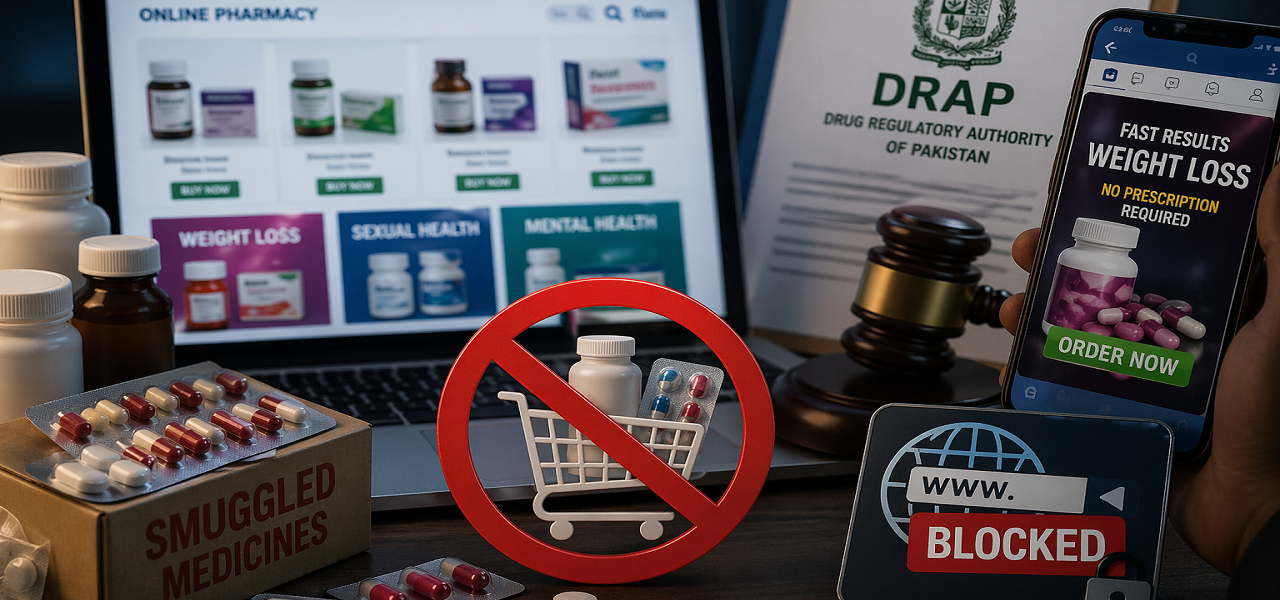
The crackdown follows a formal request by the Drug Regulatory Authority of Pakistan, which recently urged PTA to block websites involved in selling illegal medicines.
DRAP has warned that the online sale of unregistered and smuggled drugs poses a serious threat to public health, particularly as such products bypass safety checks and regulatory approval.
The authority has specifically flagged the online sale of medicines related to sexual health, weight loss and mental health as illegal, citing their potential misuse and risks when sold without medical supervision.
Enforcement Measures Tightened
DRAP has also warned of strict penalties for violations, including fines, confiscation of products and legal proceedings against offenders.
Officials say the latest actions signal a broader push to regulate Pakistan’s rapidly expanding digital economy, where online health-related commerce has grown significantly but remains vulnerable to misuse.