Cambridge Analytica Scandal: How Facebook’s Data Breach Redefined Big Tech Accountability

ISLAMABAD:
Eight years after the explosive Cambridge Analytica scandal, the fallout continues to shape global technology policy, exposing how millions of users’ personal data was harvested, weaponised, and monetised with little oversight.
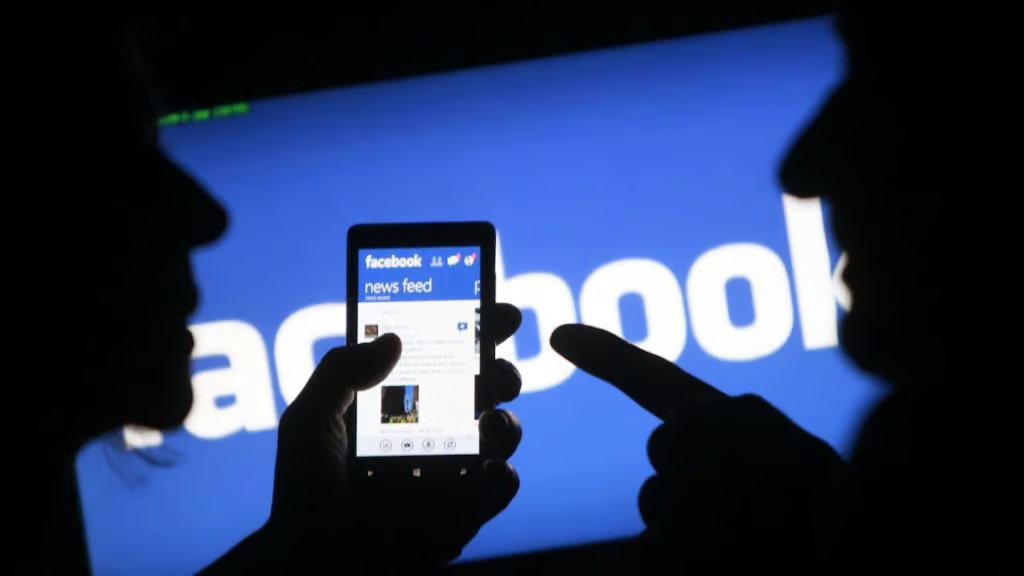
The crisis erupted in March 2018 when Mark Zuckerberg publicly apologised after reports by major international media revealed that political consulting firm Cambridge Analytica had improperly accessed data from up to 87 million users.
The data, initially collected through a personality quiz app developed by researcher Aleksandr Kogan, was used to build psychological profiles and target voters during the 2016 US presidential election and the Brexit referendum. The revelations exposed systemic flaws in Facebook’s data-sharing practices, where third-party apps were granted sweeping access to user information.
The scandal may never have surfaced without whistleblower Christopher Wylie, who described the operation as a “psychological warfare tool” designed to influence democratic processes. His disclosures triggered global outrage, regulatory probes, and congressional hearings in the United States and Europe.
Within days, Facebook’s market value plunged, and the company faced multiple investigations by US authorities. In 2019, regulators imposed a record $5 billion fine for privacy violations, forcing the tech giant to overhaul its data governance and compliance systems. Meanwhile, Cambridge Analytica collapsed, filing for bankruptcy amid mounting legal and reputational damage.
The controversy also accelerated global regulatory shifts, including the enforcement of the European Union’s General Data Protection Regulation, which set new standards for data protection and user rights. Similar legislative efforts followed in the United States and beyond, reshaping how technology firms handle personal information.
Beyond legal consequences, the scandal triggered a broader cultural shift. It challenged the notion of “free” social media, highlighting how user data underpins digital business models. Despite public backlash and movements calling to delete accounts, platform usage largely endured—underscoring the complex relationship between users and digital ecosystems.
Today, the legacy of the Cambridge Analytica episode remains deeply embedded in debates over privacy, misinformation, and the power of Big Tech. As platforms evolve and artificial intelligence scales data use further, the incident stands as a defining moment that transformed global scrutiny of the tech industry and its influence on society.