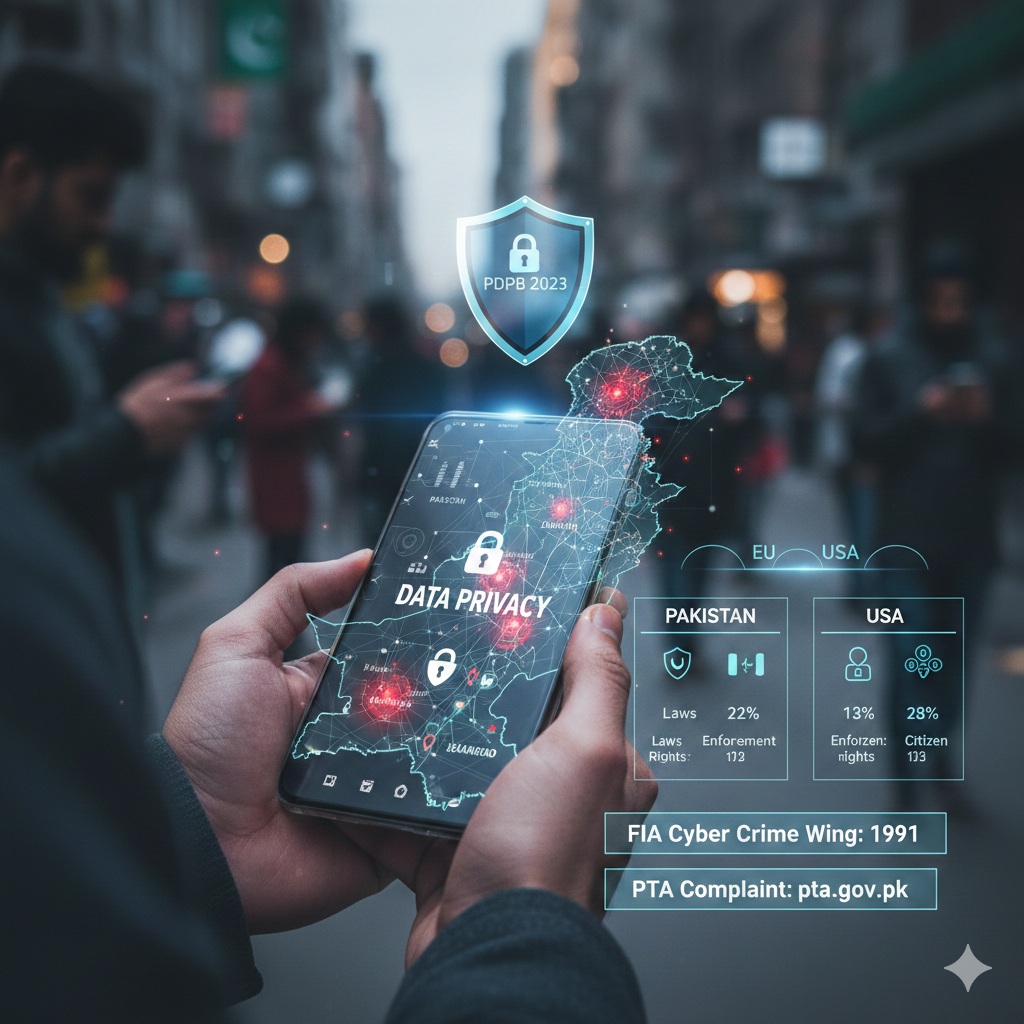

Discover how safe your personal data is in Pakistan. Learn about the 2023 Data Protection Law, common privacy issues, comparisons with other countries, and practical steps to protect your information online.
Introduction
In today’s digital world, your personal data is more valuable than ever. From online banking to social media, every click creates data that can be misused if not properly protected. While countries like the EU and USA have strict data protection laws, Pakistan is still catching up.
This article explains Pakistan’s Personal Data Protection Law 2023, common issues faced by citizens, comparisons with other countries, and practical steps to protect your data online.
1. What is Data Privacy and Why It Matters
Definition:
Data privacy refers to the protection of your personal information from unauthorized access, misuse, or sharing.
Examples of Personal Data:
- CNIC, Passport, and National IDs
- Bank account details
- Health records
- Online browsing activity
- Biometric data (fingerprints, facial recognition)
Why It Matters:
Without privacy, sensitive information can be stolen, leading to:
- Identity theft
- Financial fraud
- Online scams
- Unauthorized marketing and data profiling
Infographic Idea: A flowchart showing “Your Data → Collection → Risk → Protection Measures.”
2. Pakistan’s Data Protection Law 2023
Pakistan introduced the Personal Data Protection Bill 2023 to regulate data collection, storage, and sharing.
Key Features:
| Feature | Explanation | Practical Impact |
|---|---|---|
| Consent Required | Organizations must get permission before collecting data | Users know how their data is used |
| Right to Access | Citizens can see what data is stored about them | Verify and track your data |
| Correction & Deletion | Wrong or outdated data can be corrected/deleted | Prevent identity misuse |
| Data Breach Notification | Companies must notify citizens of leaks | Take immediate action against fraud |
| Penalties | Violators face fines or legal action | Encourages businesses to protect data |
Limitation:
- Law enforcement is still partial
- Public awareness is low
- Small companies may ignore compliance
3. Common Data Privacy Issues in Pakistan
- Identity Theft – Fake accounts using CNIC or bank info.
- Online Scams & Phishing – Fraudsters asking for OTPs or banking credentials.
- Unauthorized Data Sharing – Companies sharing your info without consent.
- Weak Security in Apps/Organizations – Poor protection of sensitive data.
- Digital Payment Risks – Mobile wallets and online banking can be hacked.
Visual Chart Idea:
| Data Privacy Threat | Severity / Risk Level | Description |
|---|---|---|
| Fraud / Identity Theft | High ███████████ | Fake CNICs or accounts created for loans, SIMs, or banking fraud. |
| Online Scams / Phishing | Medium-High █████████ | Fraudsters trick users via email, SMS, or calls asking for OTPs or banking info. |
| Unauthorized Data Sharing | Medium ████████ | Companies share your data with third parties without consent. |
| Weak Security | Medium ███████ | Poor security measures by apps or organizations make data vulnerable. |
4. Comparison with Other Countries
| Country | Law | Enforcement | Citizen Rights | Data Breach Penalty |
|---|---|---|---|---|
| Pakistan | Personal Data Protection Bill 2023 | Partial | Access, Correction, Deletion | Fines for organizations |
| EU | General Data Protection Regulation (GDPR) | Strict | Access, Correction, Deletion, Right to be Forgotten | Up to €20M or 4% of global revenue |
| USA | Sectoral laws (HIPAA, CCPA) | Moderate | Depends on sector; strong in healthcare | Varies; can be millions |
| India | Personal Data Protection Act 2019 | Partial | Consent, Access, Correction | Up to 15 crore INR |
| UAE | Federal Decree-Law No. 45 of 2021 | Moderate | Consent, Access, Correction | Fines & imprisonment |
Insight:
- Pakistan lags behind EU in enforcement and awareness.
- Unlike the USA, Pakistan now has a comprehensive data protection law.
- Citizens must take responsibility for their own data protection until law enforcement improves.
5. Legal and Practical Steps to Protect Your Data
Even with partial enforcement, you can protect your personal data:
- Check Privacy Policies – Know how apps or websites use your data.
- Limit Sensitive Data Sharing – Avoid sharing CNIC, OTPs, banking info unnecessarily.
- Use Strong Passwords & 2FA – Secure your accounts with two-factor authentication.
- Monitor Accounts – Regularly check statements and transactions.
- Report Violations – Contact FIA Cyber Crime Wing or PTA if data is misused.
Practical Solutions Table:
| Problem | Solution |
|---|---|
| Identity Theft | Only use verified services; don’t share OTPs |
| Hacked Accounts | Enable 2FA, change passwords regularly |
| Unauthorized Data Sharing | Ask company for deletion; contact PTA/FIA |
| Online Scams | Verify links, don’t respond to suspicious messages |
| Weak Security in Apps | Use apps with good security ratings; update software |
6. Where to Contact in Pakistan
- FIA Cyber Crime Wing – Handles online fraud, identity theft, and cyber scams.
- Pakistan Telecommunication Authority (PTA) – For telecom and online privacy issues.
- Consumer Rights Forums – For complaints against businesses.
7. Limitations of Current Law
- Law is new and partially enforced
- Small businesses often ignore compliance
- Legal processes are slow
- Citizens must take proactive measures
8. Recommendations for Citizens & Government
For Citizens:
- Limit sharing of sensitive data
- Use strong passwords and 2FA
- Report misuse to authorities
For Government & Organizations:
- Strictly enforce the law
- Run public awareness campaigns
- Adopt global cybersecurity standards
Summary Chart
| Aspect | Pakistan | EU | USA | Your Responsibility |
|---|---|---|---|---|
| Law Status | Partial | Strict | Moderate | High |
| Citizen Rights | Limited | Extensive | Sectoral | Medium |
| Enforcement | Partial | Strong | Moderate | High |
| Action Required | ✔ Limit sharing✔ Report misuse✔ Use 2FA | ✔ Understand rights✔ Monitor accounts | ✔ Follow sector rules✔ Secure accounts | ✔ Proactive protection✔ Stay updated |