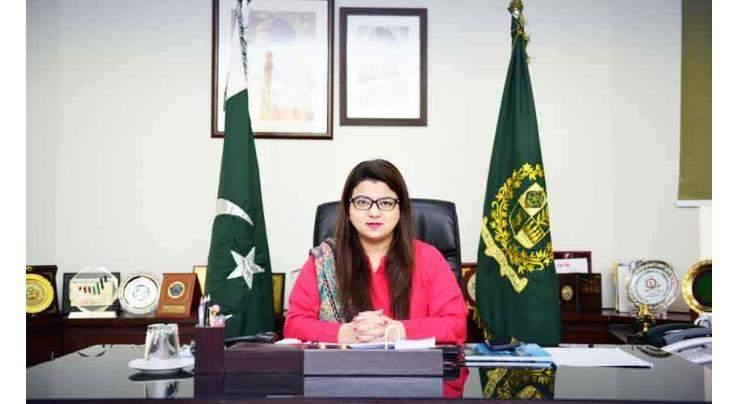
Pakistan’s federal government has placed youth digital training at the centre of its economic strategy, with Federal Minister for IT and Telecommunications Shaza Fatima Khawaja saying the country could transform its economic trajectory “in months, not decades” by equipping young people with connectivity, devices and modern technology skills.
Addressing more than 7,000 students gathered for an Artificial Intelligence (AI) training entrance test at Karachi’s Hockey Stadium during “Indus AI Week,” the minister outlined an ambitious roadmap aligned with Prime Minister Shehbaz Sharif’s Digital Nation Pakistan vision.
“If every youngster gains access to the internet, smart tools and IT training, Pakistan’s progress could accelerate dramatically,” she said, describing youth empowerment through technology as a national priority.
$1bn AI push and nationwide training drive
The government has unveiled a $1 billion investment programme aimed at building AI capacity, expanding digital infrastructure and nurturing skilled human capital. Prime Minister Shehbaz Sharif announced plans to train one million young people in emerging technologies and award 1,000 international PhD scholarships in technology-related fields.
Shaza Fatima said Pakistan had introduced its first national AI policy, now moving into implementation, to help position the country in the rapidly evolving global AI landscape.
“These initiatives aim to strengthen national AI infrastructure and maximize our human resource potential,” she said.
‘Indus AI Week’ highlights youth potential
The week-long initiative — named to evoke the legacy of the Indus Valley civilization — featured more than 100 events across Sindh’s cities, towns and rural areas. The minister noted that even children aged nine to eleven were experimenting with advanced technologies, reflecting the growing digital awareness among Pakistan’s youth.
She stressed that Pakistan’s demographic advantage — with nearly half the population under 30 — could become a powerful driver of economic growth if combined with digital literacy and innovation.
“We must move from being consumers of technology to creators, inventors and innovators,” she said.
Digital identity, super app planned
The minister also outlined plans for digital governance reforms, including the introduction of a nationwide digital identity system and a “super app” designed to allow citizens to access government services and verify documents via mobile phones, reducing reliance on physical visits to public offices such as NADRA and the Higher Education Commission.
“In developed countries, citizens can access government services through their phones. We aim to deliver similar convenience,” she said.
Investment facilitation and women’s participation
According to the minister, the government will use the Special Investment Facilitation Council to attract international investment and support young technology entrepreneurs launching startups.
She also emphasized the importance of women’s participation in economic development, calling for safer public spaces and workplaces to ensure equal access to education and employment.
“If half of the population is excluded from education or work, progress becomes impossible,” she said.
The event, organised in collaboration with the Saylani Welfare Trust, drew thousands of applicants. Sindh Governor Kamran Tessori, Sindh IT Minister Ali Rashid, and Trust Chairman Maulana Bashir Farooqui were also in attendance.