
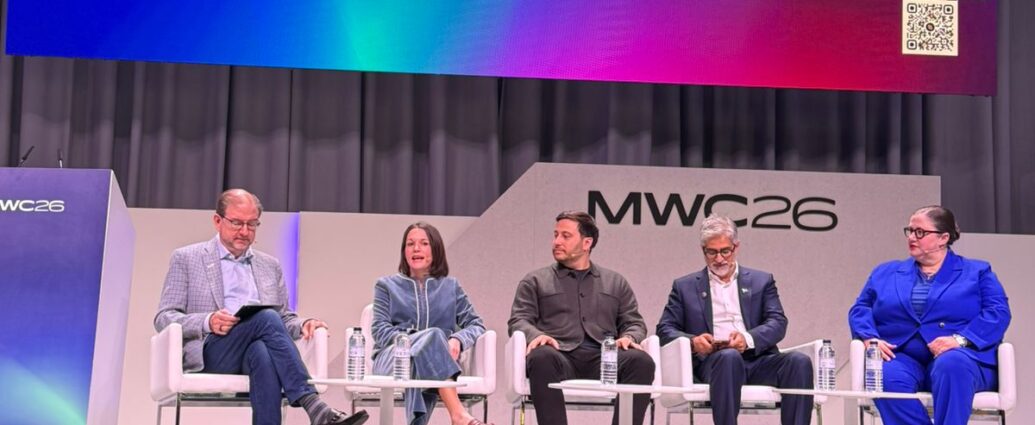
Aamir Ibrahim, Chief Executive Officer of Jazz, has called for artificial intelligence systems tailored to the realities of emerging markets, warning that technologies developed without local context risk becoming ineffective or exclusionary.
Speaking at the Mobile World Congress Barcelona 2026, Ibrahim emphasized that governance frameworks for AI must include the perspectives of countries in the Global South where digital adoption is expanding rapidly.
“Governance without representation leads to systems without relevance,” Ibrahim said during the session “The Voice of the Global South: Redefining Global Governance.” He stressed that in many emerging economies — where informal markets, shared devices, and distinct digital behaviors are common — importing technology models designed for developed markets can produce unintended consequences.
The discussion, moderated by Tatiana Caldas-Lottiger, featured global technology leaders including Christine Gadsby, Kate Kallot, and Pedro Lopes.
Ibrahim noted that artificial intelligence is already reshaping the telecom sector in two major ways. Operationally, it is improving efficiency through network optimization and faster customer service resolution. At a broader level, telecom operators play a critical national role because most digital interactions flow through mobile networks that handle sensitive data at large scale.
He added that this position places telecom companies at the center of discussions with regulators on responsible AI deployment, ensuring emerging technologies align with national priorities and public trust.
Highlighting Pakistan’s digital landscape, Ibrahim said the country represents both an opportunity and a challenge for AI development. Pakistan has more than 150 million mobile broadband users and nearly two-thirds of its population under the age of 30, yet a significant portion of economic activity remains informal — making local datasets and contextual understanding essential for effective AI systems.
In another session at the congress titled “Blink and You’ll Miss It: The Power of Micro-Moments,” Ibrahim explained how everyday mobile interactions — such as sending money, accessing healthcare, or consuming digital content — represent real economic activity in emerging markets.
He said that when supported by artificial intelligence and next-generation connectivity, these micro-moments can help digital platforms anticipate user needs while maintaining trust and inclusivity.
Ibrahim concluded that ensuring emerging technologies reflect the realities of developing economies is essential so that digital progress translates into broader economic opportunity rather than deepening global inequalities.