Islamabad
Schools and colleges in the federal capital will begin teaching Artificial Intelligence (AI) and Robotics from April, marking a major step toward modernising Pakistan’s education system and preparing students for a technology-driven future.
The decision has been finalised by the Ministry of Federal Education and Professional Training in collaboration with the National Curriculum Council (NCC). The new curriculum will be implemented from nursery to grade 12 in the upcoming academic session.
A Phased Learning Model
Under the NCC-designed framework, AI education will be introduced gradually according to students’ age and academic level.
For nursery to class 5, AI will be taught as a non-credit subject, with an emphasis on interactive and play-based learning. No formal examinations will be conducted at this stage.
From class 6 to class 8, students will move into a structured learning phase and will be required to choose between Computer Science or Artificial Intelligence as a subject stream.
At the secondary and higher secondary level (classes 9 to 12), AI will be offered as an elective subject, and the Federal Board of Intermediate and Secondary Education (FBISE) will include it in its examinations.
Skills for the Digital Economy
Education Secretary Nadeem Mahbub directed the NCC to complete the AI and Robotics curriculum for grades 1–12, incorporating feedback from education and technology experts.
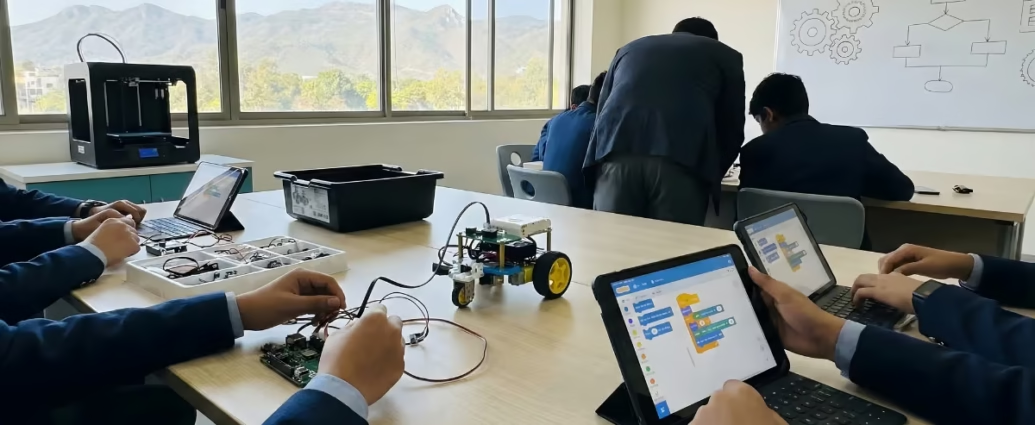
According to officials, the curriculum focuses on developing key competencies, including computational thinking, automation and intelligent systems, robotics design, ethical use of technology, and real-world problem-solving.
NCC Director Dr Tabassum Naz said the initiative was designed to empower students with future-ready skills, enabling them to compete in a rapidly evolving global digital economy.
Provincial Adoption
While Islamabad will implement the curriculum immediately, adoption by provinces will remain voluntary, as education is a devolved subject under the Constitution.
However, education ministry officials said provinces actively participated in consultations and contributed to the final curriculum, expressing confidence that wider implementation across the country would follow.