
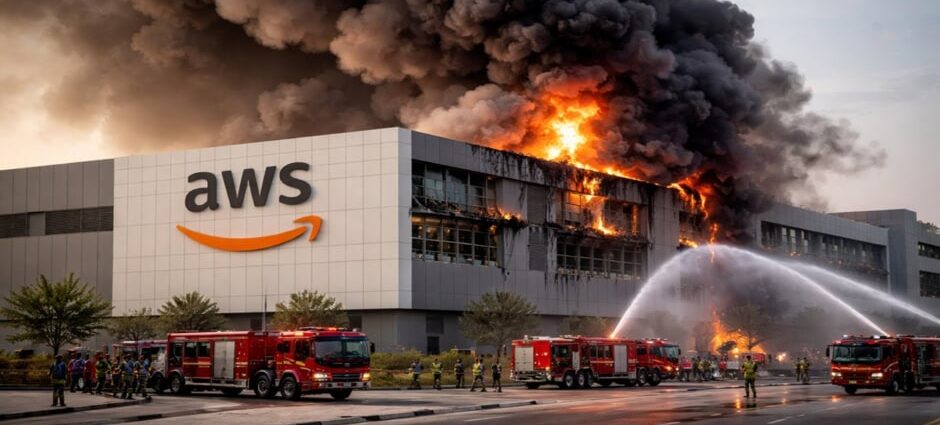
A fire broke out at an Amazon Web Services (AWS) data centre in the United Arab Emirates after it was reportedly struck by an Iranian missile, causing a major disruption to cloud infrastructure in the region.
The incident affected the mec1-az2 availability zone, where emergency responders were forced to cut power entirely — including backup generators — to contain the blaze. As a result, core services such as EC2, RDS and EBS in that zone were rendered offline or severely impaired.
Industry observers described the strike as a rare “black swan” event. While cloud outages are typically linked to software failures or isolated hardware issues, physical damage to an entire availability zone due to geopolitical conflict is highly unusual, underscoring vulnerabilities in even the most secure digital infrastructure.
AWS operates multiple availability zones within each region to ensure redundancy. In the UAE, the cloud provider maintains mec1-az1, mec1-az2 and mec1-az3. Customers using multi-availability zone (Multi-AZ) deployments were able to shift traffic automatically to unaffected zones. However, workloads operating solely within mec1-az2 experienced direct service interruptions and may require restoration from backups.
AWS has advised customers not to launch new resources in the affected zone until power is fully restored. Companies reliant on the impacted infrastructure have been urged to monitor system dashboards closely while awaiting further updates.
The disruption highlights how escalating regional tensions can spill over into critical digital infrastructure, posing new risks to businesses increasingly dependent on cloud-based services.