
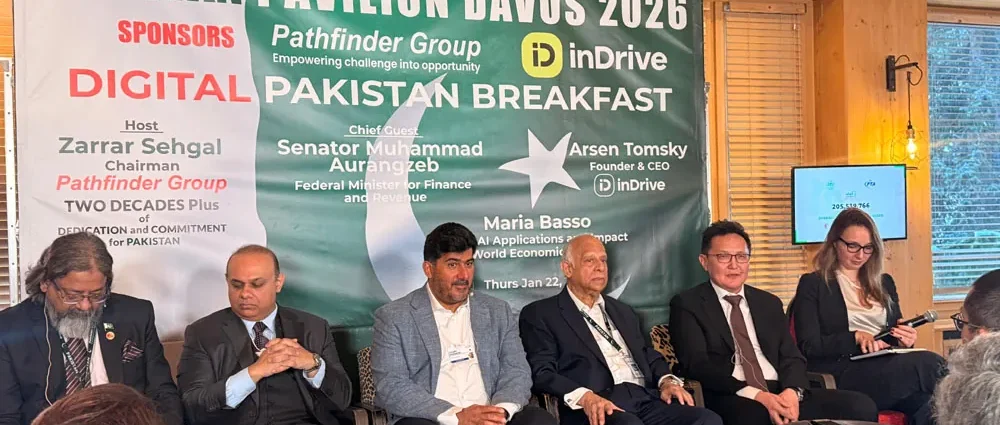
InDrive founder and chief executive Arsen Tomsky on Tuesday positioned Pakistan as a key growth market in the global digital economy, linking the country’s technology potential to what he described as a “fair choice” model that promotes inclusion, affordability and long-term participation.
Speaking at a Digital Pakistan session on the sidelines of the World Economic Forum, Tomsky said Pakistan’s young population, entrepreneurial culture and resilience made it well placed to benefit from digital platforms designed around transparency and user agency.
“I believe three assets make Pakistan especially powerful: a young population, an entrepreneurial culture and remarkable resilience,” Tomsky told the panel. “We see ourselves as a long-term partner in Pakistan’s digital economy, enabling livelihoods, supporting communities and building technology that makes everyday services more accessible and fair.”
The session brought together policymakers, business leaders and technology experts, including Maria Basso, head of AI applications and impact at the World Economic Forum; Khalifa AlShamsi, CEO of e& life; Zarrar Sehgal, chairman of Pathfinder Group; and Muhammad Salman Ali, CEO of VRG.
Tomsky said ride-hailing had become a critical layer in Pakistan’s wider digitisation drive, noting that inDrive, which entered the market in 2021, is now the top-ranked ride-hailing app in the country. The platform operates in more than 20 cities for urban rides and over 200 cities for intercity travel, supporting flexible income generation and improved mobility.
He added that inDrive is expanding beyond ride-hailing into a “super app” ecosystem, including grocery delivery, freight and fintech services, aimed at widening earning opportunities while keeping commissions low.
“People prosper when opportunity is widespread,” Tomsky said. “By offering multiple earning streams, we want to make digital participation sustainable for drivers, students and small businesses.”
Citing findings from a recent Oxford Economics study covering seven emerging markets, including Pakistan, Tomsky said flexible pricing mechanisms improved efficiency in price-sensitive economies. He noted that most Pakistani riders and drivers surveyed reported completing more trips due to fare negotiation, helping keep transport affordable.
Concluding the discussion, Tomsky said trust and transparency were essential to long-term digital adoption. “Platforms that give people agency are adopted faster and trusted longer,” he said, adding that Pakistan’s people remained its “greatest asset” in the digital transition.