
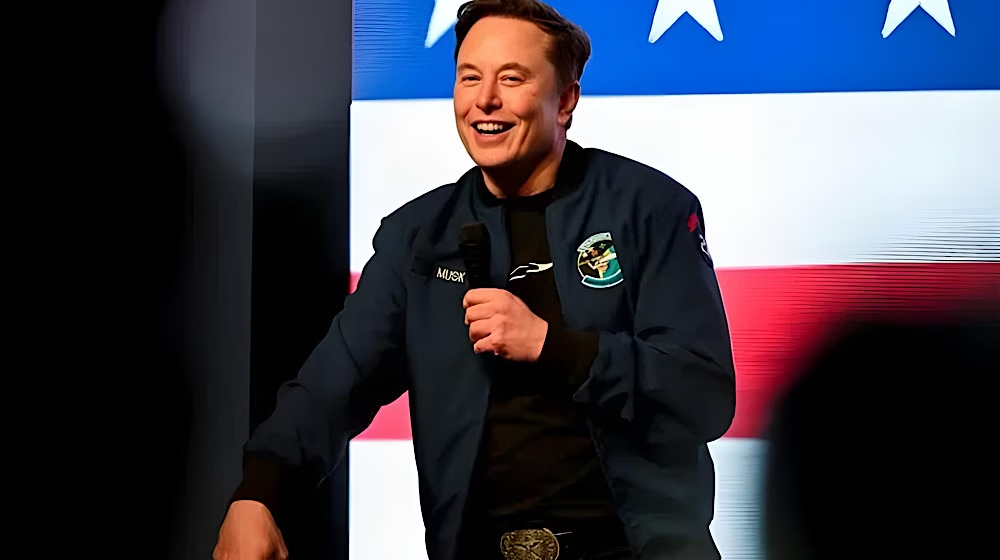
Elon Musk has demanded between $79 billion and $134 billion in damages from OpenAI and Microsoft, alleging that the artificial intelligence company abandoned its original nonprofit mission and defrauded him as a founding backer.
The damages claim, first reported by Bloomberg, is based on an expert assessment submitted to the court by C. Paul Wazzan, a financial economist who specialises in valuation and damages in complex commercial litigation. Wazzan argues that Musk is entitled to a substantial share of OpenAI’s current valuation, which he estimates at around $500 billion.
According to the filing, Musk contributed approximately $38 million in seed funding when OpenAI was founded in 2015 and was also involved in its early technical and business direction. Wazzan’s analysis suggests that, given OpenAI’s subsequent growth, Musk’s initial contribution could justify returns many times greater than the original investment. The report estimates OpenAI’s alleged wrongful gains at between $65.5 billion and $109.4 billion, while attributing between $13.3 billion and $25.1 billion in gains to Microsoft, which holds a reported 27 percent stake in the company.
OpenAI has rejected the claims, describing the lawsuit as part of an “ongoing pattern of harassment” rather than a genuine legal dispute. The company has reportedly warned investors and partners that Musk may make what it called “deliberately outlandish, attention-grabbing claims” as the case progresses.
The lawsuit is scheduled to be heard in April in Oakland, California. Musk’s legal team maintains that he should be treated like an early-stage startup investor who later sees returns “many orders of magnitude” higher than the initial stake, arguing that the case goes beyond a simple disagreement over money and touches on governance, control and the future direction of artificial intelligence development.
The dispute comes despite Musk’s vast personal wealth, estimated by Forbes at around $700 billion. Reuters has previously reported that Musk is the world’s richest individual, with wealth far exceeding that of other leading technology executives. In November, Tesla shareholders approved a separate compensation package for Musk valued at about $1 trillion, the largest corporate pay package on record.
The case is being closely watched across the global technology sector, as it raises broader questions about nonprofit governance, commercial partnerships, and the monetisation of advanced artificial intelligence systems.