
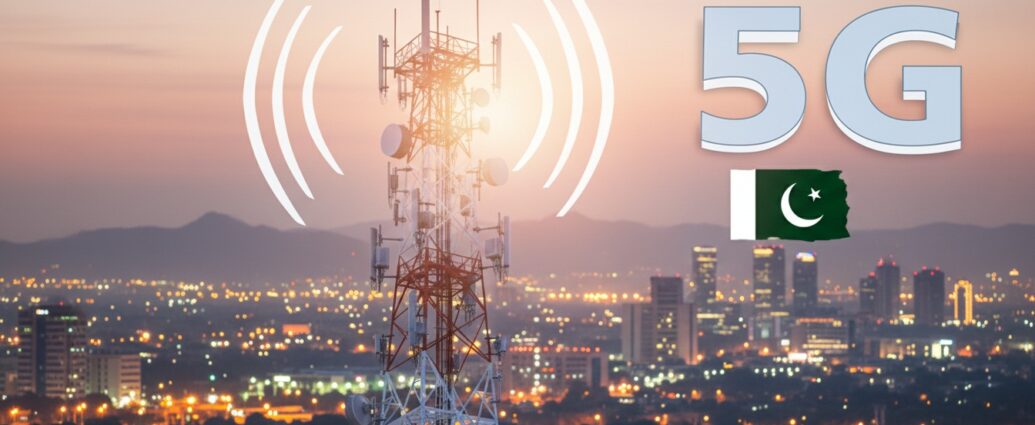
Pakistan is preparing to hold its long-awaited 5G spectrum auction in March 2026, as policymakers move to address what industry experts describe as years of “spectrum starvation” that have slowed network performance and broadband growth.
Between fiscal years 2022 and 2025, Pakistan’s mobile sector expanded rapidly, adding around 46 million new cellular subscribers, according to industry analysis by Data Darbar. During the same period, average monthly data consumption surged from nearly 3 GB per user in 2019 to 8.8 GB by 2025, reflecting the country’s growing appetite for digital services, video streaming and mobile-based commerce.
Yet despite this strong growth in demand, network infrastructure and spectrum availability have not kept pace, creating pressure on telecom operators and resulting in slower broadband speeds in several regions.
Pakistan has been operating with just 274 MHz of total mobile spectrum for years — one of the lowest allocations in Asia. By comparison, neighboring Bangladesh has roughly 600 MHz allocated for mobile services, nearly double Pakistan’s capacity, despite serving a smaller population. With a population approaching 240 million, the gap has created significant strain on existing networks.
The GSMA, the global association representing mobile operators, has previously estimated that every year of delay in releasing additional spectrum costs Pakistan around $1.8 billion in potential GDP growth. Analysts say the shortage has limited operators’ ability to improve coverage, enhance quality of service and introduce advanced technologies at scale.
Past spectrum auctions have also faced structural challenges. High reserve prices discouraged aggressive bidding and left portions of available spectrum unsold. As a result, operators were unable to secure sufficient bandwidth to expand capacity in line with rising demand.
Learning from those setbacks, the government in January 2026 unveiled what it calls the country’s largest-ever spectrum auction. The plan proposes to release nearly 597.2 MHz of new spectrum across six key frequency bands. These include low, mid and high bands suitable for both strengthening 4G services and enabling next-generation 5G networks.
Low-band spectrum is typically used to expand coverage over wider areas, particularly in rural and remote regions. Mid-band frequencies offer a balance between speed and coverage, making them central to 5G rollout strategies worldwide. High-band spectrum, often associated with very fast data speeds, supports dense urban usage and advanced applications.
Officials say the new auction framework has been designed to ensure stronger participation and long-term network investment. The model includes competitive safeguards to promote fair bidding, along with strict deployment obligations for winning operators.
Under the proposed terms, telecom companies will be required to expand network infrastructure significantly, including fiber-to-the-site connectivity for towers and defined rollout timelines extending into the early 2030s. These obligations aim to ensure that spectrum does not remain idle and that coverage expands beyond major cities.
However, industry observers note that such requirements also increase financial and operational commitments for bidders. Operators will need to balance the cost of acquiring spectrum with the heavy investment required for nationwide 5G deployment, especially at a time of economic pressures and currency volatility.
The success of the March 2026 auction is widely seen as critical for Pakistan’s digital ambitions. Faster and more reliable mobile networks are expected to support e-commerce, fintech, remote education, telemedicine and emerging technologies such as artificial intelligence and the Internet of Things.
For millions of users already consuming nearly 9 GB of data per month on average, improved spectrum availability could translate into better call quality, fewer dropped connections and higher internet speeds.
As the country moves toward 5G, the upcoming auction represents more than a routine regulatory event. It is being viewed as a turning point — a test of whether Pakistan can overcome years of under-allocation and align its telecom infrastructure with the demands of a fast-digitizing population.
If executed successfully, analysts say the auction could help unlock billions of dollars in economic value and position Pakistan more competitively within the regional digital economy.